 Rio Celeste Tours
When to Visit Rio Celeste: Months, Color and Crowds
The best time to visit Rio Celeste is a trade-off between color certainty and crowd depth. The trail runs all year, so the real question is not access but what the river will look like and how many people will be standing at the lookout with you. January and February give the surest blue and the thickest crowds. September and October bring peak rain, flood risk and green-brown water on bad days. July and November are the clever picks: July pairs lush forest with lighter crowds and vivid color, November is the emptiest month as the rains taper. Temperatures hold between 24 and 31 degrees Celsius all year, so comfort is rarely the deciding factor. This page walks through the months, the color chemistry and the timing that shapes a good day. When you have picked a window, compare options on the Rio Celeste tours comparison before booking entry slots or a guided day.
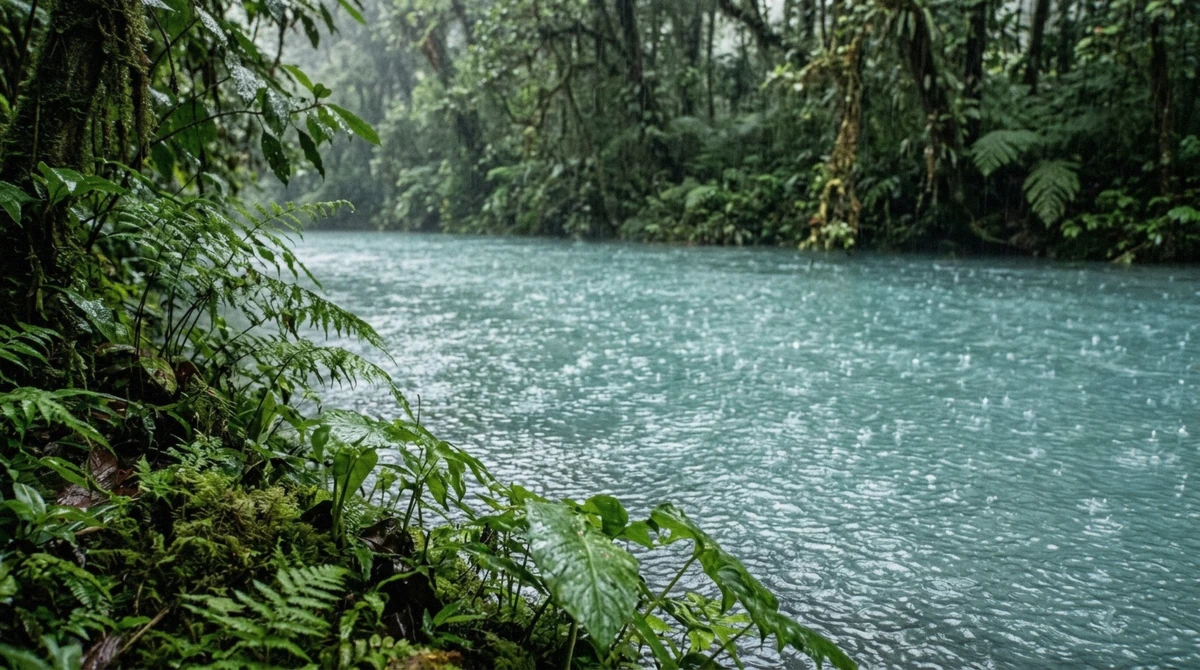
Rain decides the color more than the calendar does.
Quick answer Dry months are bluest and busiest, July and November balance color and quiet
The dry season around Tenorio runs roughly December through April, with January and February the surest blue of the year. The green season opens in May and brings afternoon rain, clear mornings and lighter trails from June through August. September and October are the wettest months, when flood surges can turn the river green-brown and trails occasionally close. November is the quietest month in the park as rains taper and the color returns.
Key takeaways
- Aim for January or February for the most reliable blue, or July for color with thinner crowds
- Book entry slots ahead in December through February, when holiday and peak-season demand fills the morning window
- Check the tours compared here, with prices to decide between a guided day and a self-guided entrance ticket before you travel
The Short Answer
Rio Celeste is open all year, so there is no bad month in the access sense. What changes is the odds. Dry months from December through April deliver the most consistent blue but attract the deepest crowds and the fullest entry slots.
The green season from May to August trades some certainty for quieter trails and greener forest, and the color still runs strong most days because the mornings stay dry. September and October sit at the wet end, with flood surges that can flip the river green-brown within hours and occasional trail closures. November is the reset month: rains taper, the park empties and the color comes back.
The blue itself is chemistry, not reflection. Two streams carrying different volcanic minerals meet at Los Teñideros, and sulfur meeting calcium carbonate scatters light into an opaque sky blue. Heavy rain loads the river with suspended sediment that overwhelms that scattering, which is why a downpour can undo a month of good weather in a single afternoon.
Temperatures barely move across the year, holding between 24 and 31 degrees Celsius at the low and high ends of the range. Heat peaks in March and April, when afternoon temperatures reach their yearly high and the river runs shallow and pale. Comfort is rarely the reason to pick a month.
Color and crowds are.
The Months at a Glance
The table below condenses the year at Tenorio Volcano National Park. Average temperatures sit in a narrow band, so read the notes for the real story on color, crowds and risk. Dry season openings in December and the peak months of January and February book out first, while the warn months of September and October carry the highest chance of a disappointing river or a closed trail.
| Month | Avg temp | Verdict | What to expect |
|---|---|---|---|
| January | 27°C (81°F) | Peak | Dry and bright, the surest blue of the year, book entry slots well ahead |
| February | 28°C (82°F) | Peak | Peak dry season, peak crowds, morning entries beat the heat and the buses |
| March | 29°C (84°F) | Good | Hot and dry, the river runs shallow and pale, start at the 8 a.m. window |
| April | 30°C (86°F) | Shoulder | Last dry month with Easter crowds, afternoon heat is the day's real limit |
| May | 29°C (84°F) | Good | Green season opens, mornings stay dry and the trail quiets down |
| June | 28°C (82°F) | Good | Afternoon rain, clear mornings, strong color most days |
| July | 28°C (82°F) | Good | The green-season sweet spot, lush forest, lighter crowds, vivid river |
| August | 28°C (82°F) | Good | Similar to July with deeper green and rising afternoon storms |
| September | 27°C (81°F) | Caution | Wettest stretch begins, flood surges can turn the river green-brown |
| October | 27°C (81°F) | Caution | Peak rain, occasional trail closures, check park status the day before |
| November | 27°C (81°F) | Shoulder | Rains taper, the color comes back and the park is at its emptiest |
| December | 27°C (81°F) | Peak | Dry season starts and holiday crowds fill the morning entry slots |
If you want a single verdict: February for certainty, July for balance, November for solitude. Everything else is a version of one of those three.
Dry Season: What You Trade
The dry months run from December through April. This is when the river reads blue most reliably, because the low rainfall keeps suspended sediment out of the water and the mineral chemistry does its work unimpeded. January is the surest blue of the whole year.
March is drier still but the river runs shallow and pale, and April is the hottest month in the band with afternoon temperatures at their yearly peak.
The crowds are the price
Dry season is when everyone goes. December fills the morning entry slots with holiday travelers, and February is peak dry season and peak crowd depth. Entry to the park is capped daily, the entry window runs from 8 a.m. to 2 p.m., and tickets are bought in advance online through SINAC, the national park system.
In-person sales at the gate are not guaranteed, and in the peak months they are effectively a gamble.
How to handle the dry season
Book entry slots well ahead, take the earliest slot you can get, and plan to be on the trail by 8 a.m. The standard loop of roughly 3.5 to 4 km takes most visitors 2.5 to 4 hours with stops, so a morning entry still leaves your afternoon free. If you would rather not manage tickets, timing and transport yourself, a guided day bundles the entry fee and takes care of the window.
The Rio Celeste Waterfall & Tenorio National Park Entrance Ticket covers the reserved slot for a self-guided loop, while the Rio Celeste Full-Day Tour from La Fortuna adds transport, a guide and lunch at $89 per person.
One more dry-season note: wildlife does not disappear, but the forest is at its thinnest and driest late in the season. Sloths, tapirs, toucans, howler monkeys and poison-dart frogs all live in and around the park. Sightings are common but never guaranteed in any month.
Green Season and the Color Odds
The green season opens in May. Mornings stay dry, afternoon rain becomes the pattern and the trail quiets down quickly. June, July and August are the strong middle of the green season: clear mornings, strong color most days and forests at their lushest.
July is the sweet spot of the entire year for many visitors, pairing vivid river color with lighter crowds.
How the color actually behaves
The river's blue is a light-scattering effect created where two mineral streams meet at Los Teñideros. Rain changes the equation by adding sediment. A heavy downpour can turn the river green-brown within hours, and the blue only returns as the sediment settles in drier weather.
That is why green-season mornings matter so much: the day's rain usually arrives in the afternoon, after you have seen the waterfall and the color change.
The honest risk months
September and October are the wettest stretch. Flood surges can turn the river green-brown, and occasional trail closures happen when the park closes for extreme weather. Guided tours run rain or shine unless the park itself closes for floods or landslides.
If you travel in these months, check park status the day before and keep your plans flexible. A verified reviewer summed up the gamble plainly: it had been raining quite a bit, so the water was not as blue as it could have been. Another put it the other way around: even though it was rainy and the river was not blue, the day was still a highlight of the trip.
November is the recovery month. Rains taper, sediment settles and the color comes back while the park sits at its emptiest. If your dates fall in late green season, this is the month that quietly outperforms its reputation.
Time of Day: Why Mornings Win
Whatever the month, mornings beat afternoons at Rio Celeste. In dry season the 8 a.m. entry gets you ahead of the tour buses and the March and April heat. In green season the mornings are usually the dry part of the day, and the color is at its best before afternoon rain stirs up sediment.
In the wettest months an early slot is simply the safest bet for a trail that is open.
The entry window runs from 8 a.m. to 2 p.m., with entry slots capped daily. The first 20 to 30 minutes of trail are flat and paved, then a long staircase with a railing drops to the waterfall lookout. The rebuilt trails no longer turn to mud in rain, which makes a morning loop far more predictable than it used to be.
Budget 2.5 to 4 hours for the loop with stops.
Swimming is not part of the day inside the park in any month or at any hour. It is prohibited throughout the protected section, including at the waterfall pool. If a river swim matters to you, the known spots sit outside the park, such as the Llanos de Cortés waterfall.
The Rio Celeste Nature Hike & Swimming at the Blue River builds exactly that into the day, finishing the park hike with a swim stop at a river spot outside the protected section.
Driving times also argue for an early start no matter the season. The drive from La Fortuna takes about 1.5 hours each way, from Liberia and the northern Guanacaste resorts about 2 to 2.5 hours, and from San Jose about 3.5 to 4 hours. Guided days handle the road for you, and the Rio Celeste Hike, Sloth Sanctuary & Llanos de Cortés Waterfall from the Guanacaste resorts starts pickups before 7 a.m. to make the most of the day.
The Color, Season by Season
The famous blue is a chemistry set, not a season: two streams meet at Los Teñideros, and where the sulfur of one meets the calcium carbonate of the other, the water scatters light into an opaque sky blue. Rain complicates the reaction by dumping sediment into the river, and enough sediment turns the whole river green-brown within hours. That is why the dry months give the best odds, why green-season mornings still work, and why a September downpour can flatten a blue day in any month that came before it.
| Conditions | What the river does | Odds |
|---|---|---|
| Dry-season morning | Deep, even sky blue | Best of the year |
| Green-season morning | Strong blue, sometimes milky | Good, better after a dry night |
| After a day of rain | Pale or green-tinged | Coin flip |
| During or after a storm | Green-brown flood color | Poor, and the trail may close |
Crowds, Weekends and Holiday Weeks
The park caps entries, but the caps bite unevenly. Costa Rican holiday weeks, the Christmas-to-January stretch and Semana Santa fill the trail to its quietest corners, and dry-season weekends run busy even at the 8 a.m. opening. The practical pattern: weekdays beat weekends, the first entry hour beats everything, and the green-season months give you a near-private trail if you can accept the color odds that come with them.
Guided listings absorb the crowd problem differently: their tickets are held in advance and their departures run early, so a guided day is also a crowd-avoidance tool in the busy months. Self-guided travelers should treat the reservation system the same way, booking the slot before booking anything else about the day.
How the Weather Actually Behaves
The textbook dry and green seasons bend at Tenorio's elevation. The park sits in the northern foothills where the Caribbean's moisture arrives earlier and stays later than on the Pacific side, so the practical dry season runs from late December through April, and the green season's afternoon rains begin in earnest around June. May and November are hinge months: May opens the rains with empty trails, and November closes them with returning color and the year's thinnest crowds.
- December to April: dry, bright, the surest blue and the fullest trail
- May: first rains, deepest green, the quiet connoisseur's month
- June to August: dry mornings, dependable afternoon storms
- September and October: peak rain, flood risk, occasional closures
- November: the rains taper and the color returns with nobody watching
Within any day, the pattern matters more than the forecast: mornings in the green season are frequently dry for the two to four hours the loop needs, while the storms build through the afternoon. This is why every recommendation on this page, in every month, collapses to the same advice: take the earliest entry slot you can get, and let the afternoon belong to the hot springs.
Reading the Park's Status Before You Drive
The good news about the weather question is that you never have to guess blind. The park's closure decisions land with SINAC, the national park system, and the entrance posts status updates that the Bijagua lodges relay to guests every morning. A dry morning at your hotel in La Fortuna does not guarantee a dry morning at the volcano, because the two sit in different rain shadows, so the reliable habit is to check the morning of, not the week before.
- Check the park's status the evening before and again at breakfast
- Ask your lodge in Bijagua: they see the valley weather every morning
- Treat a closure as a rebooking, not a loss: cancellation windows run to 24 hours on every listing here
- If the river runs brown on arrival, the hike is still good and the forest is at its loudest
One last framing that experienced visitors use: the dry season sells certainty, and the green season sells the forest. If your trip lives or dies on the photograph, book the dry months and book them early. If the photograph is one hope among several, the green season's empty trail is a better trade than most travelers expect.
Mornings Versus Afternoons, Hour by Hour
The 8 a.m. entry is the advice, and it is worth spelling out why hour by hour. At eight, the gate has just opened, the trail is emptiest, the wildlife is still working, and the light inside the canopy is soft enough for the river to photograph deep. By ten, the school groups and tour vans have landed and the staircase to the waterfall lookout runs one-way with waiting.
By noon, the humidity has climbed and the first thunderheads are building over the volcano. By two, the entry window is closed and the afternoon storms that decide the river's color for tomorrow are moving in.
- 8 to 9 am: emptiest trail, best light, most active wildlife
- 9 to 11 am: the busy middle, still perfectly good
- 11 am to 2 pm: heat, crowds, and the last entries of the window
- After 2 pm: the gate is closed to new entries and the storms start building
The afternoon is not wasted; it is just not for the trail. This is the half-day for Llanos de Cortes, the sloth reserves at Bijagua, a long lunch, or the drive home ahead of the rain. Every guided listing in the comparison builds its day around the same shape, and the self-guided ticket exists precisely so independent travelers can run the same schedule.
Two Park Facts That Shape the Timing
Two fixed rules matter alongside the weather. First, the official park entry for foreign adults is US$12 plus 13% tax, about $13.56, and it is the same price all year, so season never changes the gate cost. Second, Swimming is prohibited inside the park in every month, so no timing strategy changes what you wear on the trail: closed shoes, not swimwear.
Best-Time Questions, Answered
When is the dry season around Tenorio?
The dry season runs from December through April. January and February are its peak, with the surest blue of the year, and March and April turn progressively hotter with a paler, shallower river. Holiday crowds fill the December entry slots.
What month is the Rio Celeste bluest?
January. Dry, bright weather keeps sediment out of the water and the mineral chemistry at Los Teñideros produces the most reliable blue of the year. February runs a close second but with deeper crowds.
Does it rain every day in green season?
Not every day, and rarely in the mornings. The green-season pattern from May through August is clear mornings with afternoon rain. The color runs strong most days in June, July and August because the rain arrives after most visitors have finished the loop.
When is Rio Celeste least crowded?
November is the emptiest month in the park. The rains are tapering, the color is coming back and the peak-season demand has not started. May and the shoulder weeks around the green season are also quiet by dry-season standards.
Is Rio Celeste worth visiting in the rainy season?
Often, yes, with managed expectations. Verified reviews describe days where the river was not blue and the trip was still a highlight. The forest is at its greenest, the trails are rebuilt so they no longer turn to mud, and the main real risks are green-brown water and occasional closures in September and October.
What time should I enter the park?
As early as the entry window allows. Slots run from 8 a.m. to 2 p.m., and an 8 a.m. entry puts you ahead of the buses in dry season, ahead of the afternoon rain in green season, and gives you the full 2.5 to 4 hours the loop needs at an unhurried pace.